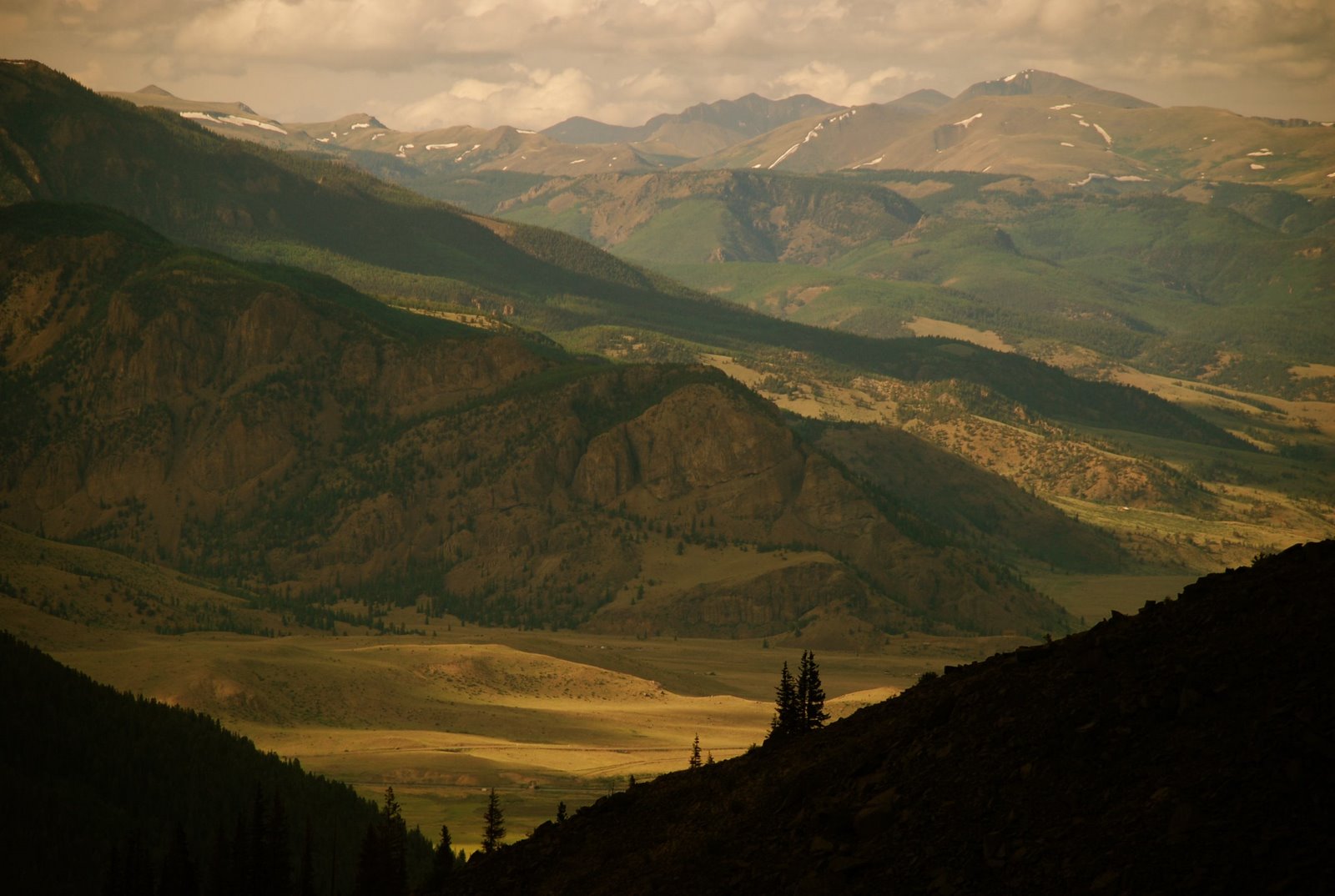
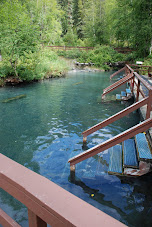
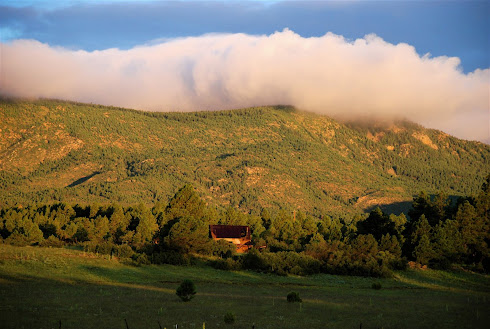
The view west from the homestead

The view west from the homestead

Sweet Chance

Sweet Chance

Tuesday, April 29, 2008

LA PLAYA


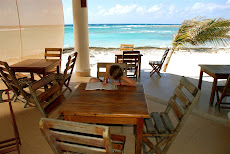
Estamos en Paa Múl, un campamiento entre Playa Del Carmen y Akumal. Es un lugar que tiene menos desarrollo que otras partes de la costa este del Península del Yucatán. Paa Múl tiene un hotel y siete cabañas, una piscina enfrente del mar, y un restaurante. La mayor parte de este lugar es para RVs, los coches muy grandes, como casas con ruedas. Personas han construido palapas encima de los RVs, y se parecen como cabañas. Hay más de 100 como eso. La mayoría de las personas son de los Estados Unidos y Canadá y regresan a sus países en la primavera. Es muy extraña, pero podemos vivir muy económicas en nuestro tráiler de camping. Lo que no me gusta es que hay pocos de los extranjeros que hablen español. Es como cualquier playa en los Estados Unidos. ¡PERO….es una playa! La excepción es los domingos, cuando muchas familias Mexicanas vienen por el día.

Hemos estados aquí hace tres semanas y vamos a salir en unos días. El mar es fantástico para nadar pero el arrecife y los corales no están en buena salud. Demasiados hoteles, casas, y resortes, al lado del mar han tenido un gran impacta. También han tenido unos huracanes fuertes en los años pasados. Paa Múl es un lugar a que muchas personas vienen para nadar con esnorkel. En el pasado, el arrecife aquí debe haber estado increíble. Ahora, los corales que están en buen salud son más profundo, como 4 o 5 metres, y tiene que hacer scuba para verlos. Lo que se veen el mar enfrente del restaurante son peces interesantes, y pequeños lugares de los corales.

Ayer, fuimos a una laguna unos kilometres al norte de Akumal. Fue muy divertido….muchos peces y lugares interesantes para explorar nadando con esnorkel. El agua estaba muy protegida y calma. Estaba bueno, porque los niños, hace tres días, tenían un poco miedo del mar. Teslin chocó contra un Portuguesa Man of War (una medusa muy malo). Nuestra familia estaba nadando con esnorkeles afrente de Paa Múl, cuando Teslin empezó a gritar. No lo veíamos, pero ella recibió muchos aguijones. Mas tarde, Teslin nos dijo que siento como un garrafón del fuego en la espalda. Ella tomo medicina para dolor y hinchazón, y todavía, hace tres días, tiene los marcos del medusa en la garganta y la espalda.

Pues…es la hora ir a la playa. ¡Adiós Amigos! Anny

Saturday, April 19, 2008

Resplendent Quetzal

Cassidy Ruge, age 13


Description
Resplendent Quetzals are one of the world’s most gorgeous birds. I have never seen one myself, but I’ve heard of how beautiful they are. Males have a red breast, green body, bluish back and very long, green tail streamers. They also have a yellow beak, which is fairly small (the females have black beaks). Males are 39 inches in length, including their plumes or streamers. Females have much shorter plumes (just extending right below the tail) and are drabber in color. The “song” is like “a whimpering pup” or as kyow or vi-viu, which is sometimes repeated monotonously. They have other unmusical calls too.

Range and Habitat
“Resplendents”, as I call them, are found from southern Mexico to western Panama. There is also a subspecies found in Costa Rica, P.m. costaricensis. The population in southern Mexico (Pharomachrus mocinno) is found only in Chiapas in remote montane cloud forests called “bosques de niebla”. The “bosques de niebla” are dense and wet and have mixed trees including pines. One of the quetzal’s favorite trees is the tepeaguacate tree, which has small avocados that the quetzals like to eat (see diet).

Diet
Resplendent Quetzals eat mainly fruit; their favorites are the wild avocados from the tepeaguacate trees. They also like fruit from the trees of the Laurel family. The birds swallow the fruit whole and then regurgitate the pits, which helps to increase the population of these trees.
Resplendent Quetzals are weak fliers and they have some predators. These include the Ornate Hawk-Eagle, owls, and Kinkajou, which hunt the birds themselves. Emerald Toucanets, (yes, little toucans) and squirrels, eat the eggs of the quetzals when the nest is left unguarded.

Breeding
Resplendents usually start calling and looking for mates in February. They start nesting a little bit after they call and mate. The female chooses a suitable tree for nesting (mostly rotting tree stumps) and then the pair pecks out a good-sized hole for the nest. Then the female lays 2 pale blue eggs and starts incubating them. The male and female share incubating: the male sits on them in the daytime while the female incubates at night. The incubation period lasts 18 days while the pair keep switching off incubating. When the male is sitting on the eggs, his long tail hangs out of the nest-hole so that from a distance it looks like a green fern is growing out of the hole! When 18 days are up, two little quetzal babies pop their heads out of their shells and say “give me some grub, mom”! Both parents take care of the little youngsters and feed them their grub, which includes fruit, berries, insects, and some frogs and lizards (big grub). Here is when it gets interesting. Near the end of the rearing period the female gets sooooo fed up with her little furballs that she says “vaya con dios you little scraps”, and leaves the dad to finish rearing the young until they are ready to fend for themselves!

Myth and Legend
Resplendent Quetzals play a big role in Mayan and Aztec legend and myth. The Mayans and Aztecs viewed the quetzal as the “god of the air” and as a symbol of goodness and light. Mesoamerican rulers wore headdresses made from quetzal feathers that symbolically connected them to Quetzalcoatl. Quetzalcoatl was the god of wind and the creator god. It was a crime to kill a quetzal so people simply captured and plucked its tail streamers and then released the bird. The tail feathers supposedly grew back in time. Ohh, I forgot. Mesoamerica was a region of Central America and South America that was inhabited by the Mayans and several other pre-Columbian civilizations.
The Resplendent Quetzal is Guatemala’s national bird and the quetzal is on their flag and coat of arms. The bird is also on the paper money and of great relevance in the country. It is mentioned in the widely popular legend of Tecún Umán, a prince/warrior of the Quiche Maya. The legend is that when the conquistador, Pedro de Alvarado, fought against Tecún Umán, there was a quetzal flying above the fight. Pedro de Alvarado managed to disable Tecún Umán’s horse and then killed him. Then, the quetzal flew down to Tecún’s chest and dipped its chest in the warrior’s blood. It was there that the quetzal acquired its gorgeous red chest feathers.

Conservation
Resplendent Quetzals are as Wikipedia states “near threatened”. They are not on the Endangered Species List but they might be on it in the near future. The population in Guatemala and southern Mexico is most threatened due to loss of habitat and hunting for their feathers. Costa Rica’s population of quetzals is in better shape because Costa Rica is setting aside some forest for quetzals and other wildlife.
I wrote this article so I could learn more about quetzals and help the species. I traveled through the quetzal’s forest in southern Chiapas and never saw one but I’m glad I at least know a little bit about them.


References:

1. Resplendent Quetzal, by Wikipedia, the free encyclopedia
2. El Quetzal, by Miguel Limón Rojas, Edmundo Salas Garza
3 A Guide to the Birds of Mexico and Northern Central America, by Steve N. G. Howell and Sophie Webb
4. The Resplendent Quetzal, by TED Case Studies
Saturday, April 12, 2008

living small


Chris estimates we have 24 square feet in Popi. Maybe 26 he says. That doesn’t include the 2 enormous beds on either end of the pop-up, or our table area. Our one couch is usually covered in bags and books, but we are able to leave the middle part empty with some effort. Our 2 counters are covered by milk crates filled with food, a stack of 4 plastic storage drawers of dry goods, and Chris’s towering metal shelf that houses our ghetto blaster, towels, books, Baby (our sourdough starter that lives in a 2 quart casserole dish), and the mother load of all STUFF.

Our square footage shrinks as we unpack more. The first few days are always fine. Then STUFF happens. Books come out of bags, and the storage containers in the car become volcanoes of art, shells, journals, and knick knacks, all slowly migrating into our square footage.

Then there are the fans. So far we have made it with 2 small Vornado fans, one facing each bed. For a surprise, Cassidy, Teslin, and Chris bought an enormous rotating fan. Its base takes up the entire walking area in front of the sink (that’s 4 of the 24) and it stands 5 feet high. It’s Iowa size. Only Chris would think that we could actually fit it into this place. But oooooo does it move air! Now at night, the kids each have a fan and we have the big Kahuna blowing on us. We’ve all slept better and it’s great for hot flashes. In the daytime, we move things off one end of a counter and put it up there so no one catches their privates in it.

We have a morning and evening rotation ritual. Evenings, we uncover our beds from the myriad of things that have accumulated there. The guitar, computers, and our ocean size wooden fruit bowl all make this voyage. In the morning, everything that spent the night on the table and the benches is moved back onto the beds so we can sit down.

Another rotation ritual is to open and close the inside stove. We do most of our cooking on the outside stove, but morning tea is produced inside---very important. When the stove is closed, it offers almost 2 whole square feet of counter space, so it’s well worth the effort. Each morning it’s filled with various water jugs, dirty dishes, and the usual left behind things from the night before.

There is a bright side to this life of rotation…..it keeps the inch long cock roaches on the move. This morning when we moved a milk crate off the bench, a big honking cock roach fell out onto the table. Chris pounced on it like a cat, but was forced to have mercy on it by Cassidy and Teslin, who insisted he let it go by the dumpster where it can lead a happy life. Ahh yes. Live and let live.

Anny

Saturday, April 5, 2008

WOW!!!


It is 7:30 pm and Chris and I have been instructed to sit down and RELAX by Cassidy and Teslin who are making us dinner. Not just any dinner, Cassidy is out at the grill by himself doing his first rite of passage at the barbeque and Teslin is making a salad and setting the table in a flurry of action. We're doing our best to drink beer and relax, but frankly, Chris is just plain uncomfortable with the solo action outside. He feels that barbequeing is a male bonding experience and feels left out stuck here inside of poppy. Ahhh....there are some wonderful surprises to watching your children grow up!

La Playa is Windy!


Paa Mul

April 5th or so

It's another one of those early mornings when everyone is still asleep and I've managed to creep out and make tea and get to the only computer that has internet. Hee hee. We are tucked into Paa Mul, just south of Playa del Carmen on the Yucatan Peninsula. It is a former coconut plantation that was turned into a RV resting home of all things. There is a hotel with some rooms and some cabanas further down the beach, but most of the property is sites for RV's. It actually is very nice....most of the spots are semi-permanent and palapas have been built around the RV's. Many people buy or rent a space year round and return north in the summer. There is a fairly large group of people that live here year round and call it home. We know of two families so far, one from California and one from Canada, who are here with their families and home schooling. One family set off for 2 months 4 years ago.....I see how it happens, believe me!
The entire Yucatan coast has turned into a swarm of resorts, back to back. We stopped in to Tulum on our way North and were shocked by what they've done to the place. For Chris it had been 30 years since he first visited, and at that time there were only two places just south of the ruins. I was last there in 91 and even then, it was quieter. Now the area stretches south all the way to the preserve where building is not allowed. We spoke to a worker at Cabanas Tulum who said the area lost their electricity during Hurricane Katrina 7 years ago and it still hasn't been restored. With so many resorts dependent on it, you have to wonder why the government hasn't replaced it. The motels must use generators and solar.

What is amazing about this place is that there is no sign of development nearby. Paa Mul itself was built in the 70's (I think), and the entire bay here is owned by them. There is a sandy road that leads north along the coast from the campground to another bay, which is even larger than this one, and is completely undeveloped. One of the security guards told us it is owned by the same guy who owns 2 of the largest resorts down the way and has "plenty of money". One side of the road is lined with mangroves and scrub, and the other a pristine sandy beach. There was little more than some pelicans and alot of trash that had washed in. It is impossible not to wonder what will become of this beautiful stretch. The security guard said for now it was protected as a turtle breeding area....for now. He said if it was ever to be developed it would only be cabanas (versus a mega hotel). Time will tell.

It is hot here but there is a stiff wind.....24 hours a day. The surf is quite worked up and Cassidy and Teslin have been boogie boarding. We are paying by the week, but thinking about a month. Once you get in here, it is hard to leave! There is a pool right in front of the ocean, a nice restaurant, and all the facilities we need. 10 minutes up the road is more than we need....all the giant stores and strips of motels.

Well... everyone is up and asking for a turn, so off I go....TATA for now, Anny

Tuesday, April 1, 2008

¡AGUA DULCE!


Estamos en un lugar muy tranquilo, al lado de la Laguna Bacalar. Las personas de aquí nos dijeron que al agua no es de sal, es dulce. Podemos ver una península pequeña al otro lado de esta laguna, y es el lugar del mar. Cassidy y Teslin están tratando abrir unos cocos. Cassidy se cayó dos veces….es trabajo difícil. Chris está nadando, y nuestros nuevos amigos están tocando música y suben un árbol de coco. ¡La Vida estupendo!

End of March

We are working on day 4 at Laguna Bacalar just North of Chetumal. We’ve just completed bucket baths on the grass under the palms and are feeling fresh and frisky. The water is crystalline turquoise, although it is fresh water (I’m not sure why it is called a laguna….it does not seem to be connected to another body of water). All of the Yucatan is a limestone shelf, so any body of water that is clean looks turquoise because of the white bottom. The laguna is a long slender body of water that lies about 6 miles inland from an enormus brackish bay which leads out to the ocean. Cassidy and Teslin have written about the wonders of the place, so check out their blogs too (see under links).

The place where we are set up, Balneario Cocolitos, is not a formal campground, although the family that lives in the palapa here let folks stay for a fee. We snaked our electrical cords over to their spot, and are set up beneath the palm trees on the grassy shores of the laguna. It is quite idyllic, especially since we are the only folks here, along with the couple that we gave a ride to. There are no showers or water other than the laguna, although little is needed. The toilets are the best….they are nice roomy open-air stalls so you can bird while you relieve yourself. This morning there was a pair of orioles in the palm tree above the toilet. It does get a little hot at mid-day, but who’s complaining.

Ceynote Azul is just up the road. It is a deep, fresh water sink hole surrounded by mangrove and palm trees. A large restaurant dominates the scene and it has become a major destination place. We originally came to this area to go to the ceynote, but it is only accessible through the restaurant and is a much used place. A large assortment of fish hang out by the restaurant since they feed them tortillas regularly, and there is a boat/raft you can swim out to and jump off of. My favorite thing about ceynotes is to explore the mangrove roots for all walks of fish. We haven’t done that with Ceynote Azul yet…we will see. From what I remember, the keynotes are an important rookery for fish who spend their early months sheltered in the roots of the mangrove trees. I’m not sure what the heavy use of the area has done, but I imagine it is not good.
The couple that has been traveling with us, Nicole and Nate, are taking off this morning for Tulum. The peace of this place might be a little slow for the jovenes…..it also has no facilities at all. We are all set up here with electricity, fans, and a kitchenette (emphasis on “ette). But you know, as we spend more and more time leading this simple life, it becomes more evident how little you need to live off of. Nicole and Nate are back-packing and living much more simply than us. Ahh to be 20-something again!
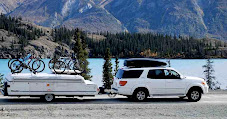
Life on the road has become second nature. We’ve figured out the basics of how to always have delicious, clean water to drink, how to disinfect fruit and veggies, and how to live without toilet seats. Chris has the driving down, we see most of the topes, most of the time, and so far we've only gotten one policia bribe request (for a flashlight). Poppi continues to show the strain, the fridge liner is busted, the awning is held together with duct tape and other tarps, and the couch is held up by a cutting board. Our beds are still heaven, and we’ve figured out how to move deftly out of each other’s way in this tiny space. Our only summit yet to climb is to teach the Sequoia to drink something other than gas.

So much for now! Anny

Misol Há


March 26th
Oh my. Misol Há is a beautiful area. There are two 100-foot waterfalls cascading through rainbows into a large swim hole in deep jungle. The cliffs behind the falls cut in sharply and they have built a walk way behind them. If you follow the ropes completely behind the falls, they lead up to a cave. There are solid nylon ropes to hang on to, and smaller cascades coming down around you as you ascend the rocks to the cave opening. Chris, Cassidy, and Teslin took the 10 peso tour back into the cave……they will have to describe it, since I sat happily on a high overlook and watched life go by (I heard something about a large dark cavern with tons of bats and fish with giant eyes). While I sat, 2 toucans soared over the falls, followed a bit later by a pair of bat falcons. The sun was darting behind clouds and every time it reappeared, created a massive rainbow at the base of the falls.
THEN a skink led us downstream into a fairy land of small waterfalls and swim holes, around boulders, through water deep and cool and clear to other boulders, falls and deep pools. The skink was chasing bugs near the end of the top pool and then got up on his 2 back feet and ran across the water to another boulder. Jesus the Skink. Quite something, really. We played and explored for quite some time until Chris took a jump off a boulder into what we thought was deep water and hit a rock 4 feet under. Luckily he landed flat and didn’t break anything. He was quite sore though, and we had to give old gramps a rest (I’m happy to report there was no lasting damage and Chris is as limber as ever).
It was quite incongruous to find 6 tour buses in the parking lot when we came up. 95 percent of the visitors just go down to look at the falls, take a picture, and never set foot in the water. A man who works in the campground in Palenque told us that it is just in the last year that Misol Há got on the map as a major tour destination. Chris had been there many years before and found it quite empty. Now there are cabanas and a nice restaurant. They’ve made a huge parking lot, so must get quite a few people though. We hope that like all of the popularized beauty spots, that they are good stewards this amazing place.

Wednesday, March 26, 2008

BONAMPAK


March 23rd, 2008

We are camped by a beautiful green rolling river in the Lacandón jungle in Southern Chiapas. The name of the place is Campamento Lacandones . The river spreads out just upstream and has created a wide waterfall that you can climb up and jump off of. The falls come in from many different angles. It is truly beautiful. There are also some great trees that the young (and Chris) can climb up and leap from. A three meter crocodile has been seen up just river several months ago but hasn’t shown his chops here yet. As for the birds…..see Cassidy’s blog entry entitled: “ Euphonias, Tanagers, and Honey Creepers, Oh MY! “ (Cassidy’s and Teslin’s blogs are hyperlinked near the top of our blog).
Our fellow Vagabundos, Susan and Esteban, are here as well. Susan is an avid birder, and she, Cassidy and Chris have been getting up daily at daybreak to go birding. The rest of us have enjoyed the babble of the waterfall and the beautiful sound of bird song through our pillows.
Bonampak is near the Guatemalan border south of Palenque and is in a large preserve or protected area. The area around Bonampak is managed collectively by three distinct indigenous groups’ the Lacandones who previously inhabited the Lacandón Jungle, the Choles and the Tzeltales. There are places like this one popping up all around the area, offering cabañas, places for hammock dwellers and camping. This area is relatively new to tourism. Bonampak was accessible only by airstrip until 1997 when the Mexican government built a road in from Palenque. With the road came modernization and well…you know the rest. It is a very precious place still.
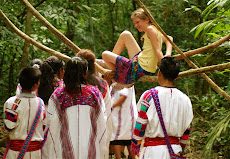
There is an internet hut a twenty minute walk from here. It is owned by a Lacandón family who also has a campamento. The place is a simple room with 5 computers, shelves of wood carvings, baskets, some clay figures, and seed necklaces. The family that runs it spans 3 generations and most still dress in the traditional Lacandón tunics which are long white cotton shifts worn by the men, women and children (the young girls were dressed in colored tunics). The older man explained how they get the fiber from the inner bark of a tree, while his daughter showed us how they make cordage by rubbing the fibers firmly between their palm and leg. Behind their shoulders I could see Internet Explorer home pages.
The Lacandón people seem very aware of the pressures on their jungle habitat. Although we ourselves pose a threat to this, the tourist trade is not the greatest of their challenges. The destruction of the rain forest is happening here just as it is in more well known areas such as the Amazon. The entire drive south from Palenque, there were large herds of cattle grazing on land that was once jungle. The trees are cut down for firewood, for grazing, for fields and to provide habitat for an ever expanding population. Many people have already migrated to the area from other parts in Mexico, and the pressure it places on the land will only continue. The Lacandón seem wise stewards of the earth and I only hope that this special culture has the strength to survive the political and social pressures that come with growth.

Campeando Estilo Méxicano

It is Easter holidays here in Mexico and many are out and about. Two different times, both here and in Palenque, we were nestled down for the night when 2 tour buses arrived (around 9:30 pm) from Mexico City. They were packed to capacity with Mexicans with the best attitudes I have ever seen exhibited while setting up camp under less than optimal conditions. They piled out of the buses, searched for dry and level areas of ground, pitched small tents in the dark-all within a few feet of each other (and us)- waited without complaint at the 4 bathrooms sans TP that were too small for their numbers and not functioning well and then slept a short hot night after grabbing whatever they could eat from the kitchen. The next morning they hurriedly rolled up their wet tents and bags, lined up again at the bathrooms and then were all packed into the buses again, taken to the ruins for a visit and another long drive to their next destination. It was quite an odyssey….a little appalling at first sight, but you can appreciate it much more once you see that there were grandparents, grandchildren, city dwellers, small pueblo citizens…..all walks of life, happily going “camping” together. I would hate to hear the complaints from a bus of US tourists! These folks were all very good natured and seemed to be having a great time. Obviously, this is an affordable and accessible way for them to get out and about.

Anny

Friday, March 14, 2008

¡ADELANTE!


We finally said goodbye to Oaxaca after 6 weeks of school and sedentary living. We had settled in to a great schedule of 4-6 brisk 15 minute walks a day and city living. We left Saturday, March 8th, at noon alter a morning of goodbyes to our housemates and set off South on the Pan American Highway. Things were going great until the road was blockaded by “las maestras” 10 miles north of Tehuantepec. It is a very complicated story and I don’t want to minimize the importance of the schoolteachers’ dilemma or demands but road blockades have been adopted as a bargaining tactic by the teachers’ union and everyone is thus included in their struggle. Anyway, we were directed on to a dirt road at the military checkpoint if we wanted to avoid being stuck on the highway for 24+ hours and we decided to just follow other vehicles they had already diverted that way so off we went. It was a very interesting detour down an ever-narrowing dirt road with many interesting turns and ruts, which got even more interesting as night fell. We finally came to what looked like a dead end at a river some 50 feet wide but watched the lights of a pickup truck as it crossed it and they didn’t go underwater so lumbered after him with the trailer in tow. We felt like we were part of an old wagon train- just needed a cow tied to the back bumper to make it authentic. Anyway- finally made it to Tehuantepec at 9pm and crashed at the Calli Hotel. Birded in the grounds and around the pool the next day and then headed out at noon for Ocozocoautla (outside of Tuxtla Gutierrez) and the Hogar Infantil.

Day one at the orphanage was spent looking closely at the popup and getting organized again for living in the trailer. We were surprised to find that the back section of the trailer had separated from the body and there was a 2-inch gap of air leading in to the inside- not good for tropical climates! After much thought, we decided that Duct Tape was definitely the treatment of choice and proceeded to wrap it tightly alter removing the spare tire. It looks like it may work for a short-term solution and will see how it does on the highway. Anny was so impressed it got her to write a poem-she really applied herself!

Sima de los Cotorras

We heard through some friends who had preceded us that there was a great birding place close to the Hogar that we should check out. We drove out some 12-14 miles on a dirt road following signs for the selva and the sima and finally arrived at a huge limestone sinkhole some hundred yards across and several hundred feet deep surrounded by scrub trees and filled with huge trees on the bottom. Several thousand birds-mostly green parrots or “Cotorras”- roosted in the Sima (sinkhole) at night so we waited there until nightfall far the nightly return. We were not disappointed as groups of parrots started returning at 5pm as wave after wave came in for the next 2 hours. They made quite a racket as they flew in and settled in along the cliff edges and tops of trees. Cassidy and I were so impressed that we got up at 5:30 the next morning to be there at sunrise as they came out. We left with it still quite dark and arrived at the sinkhole before grey light. We heard some great bird calls in the dark so turned the car off and waited. We were surrounded by Buff-colored and Paraque Nightjars who have a wonderfully eerie call and they came quite close to us as they hunted insects in the night. We just sat there in front of the car for 10-15 minutes until it began to get lighter then proceeded to the sinkhole. It was very quiet in the Sima when we arrived with an occasional parrot call echoing around the hole. Then, as light came, wave after wave of parrots, 20-30 in a group began spiraling their way out of the sinkhole. They called continuously as they rose, seemingly calling others to join them, and then flying off in different directions for the day’s activities. This went on for close to 2 hours as we watched and listened and was quite a treat. After most of the parrots had left the sima, we walked the scrub area around the sinkhole and came across groups of noisy Chacalaca, Black-headed Saltators, Altamira Orioles, and a Squirrel Cuckoo, which is one of my favorites. We finally left at 10am and returned home.

Tuxtla Gutiérrez Zoológica

We went to Tuxtla that night to get groceries and visit the Zoo, which we had read great things about. Cassidy has a great description on his Blog-see under Links. The zoo was amazing- one of the best I’ve ever experienced- as it is a large reserve filled with large trees and scrub on the side of a mountain with several streams running through it. Almost all of the animals and birds were residents of Chiapas and there was actually more wildlife outside of the cages than within them as hundreds of birds-Chacalaca, MotMots, Guan and Curassows flew in to the park for feeding and some seemed to have taken up residency. Large rodent-like creatures the size of large cats-Agoutis-wandered the zoo’s grounds by the hundreds and the air was filled with the cries of many parrots and other birds. Spider monkeys could be seen in the tops of trees as one walked through the park- we did not know if they had escaped their own enclosure or had come to the park on their own. We walked on a great 4-5 km path that wound its way through the park over 2+ hours and as we were leaving, we were treated to a loud penetrating growl of a black panther that reverberated through the park several times. It made one think of dinner-in many different ways.

San Cristóbal de las Casas

We left on the 12th de Marzo for San Cristóbal and moved in to the Bonampak Hotel trailer park, which is quite comfortable for 4 nights before continuing on towards Palenque. San Cristóbal is a wonderful city in the midst of the highland Maya region that is unique for many reasons. The Zapatista uprising happened here in the 1990s and the area is still in flux with many communities close to here that actively support and align themselves with the Zapatista movement and others who side with PRI or other government groups. There continues to be a large military presence and harassment of Zapatista followers and sympathizers and history continues to be made as this struggle continues. The overall feel of the town is also very different with its architecture reminding one more of Guatemala and Central America than Mexico and the narrow rough cobblestone streets making even Oaxaca seem very “modern”. The tourists are mostly European---Americans are definitely outnumbered--with an interesting smattering of more “earthy” types sporting native dress and the less showered look-our kind of people! We hope to get out of the town to surrounding communities before we head out but also plan on returning for a longer visit on the return trip if money allows. Anny and I both love this place and want to explore its riches. Unfortunately, other foreigners also share this feeling as Century 21 is in business advertising new homes in gated communities, which is a little distressing. Anyway- more to come.

Chris

Las Hadas Tardes

En nuestra casa, las Hadas habían venido cada año en la noche ante de los cumpleaños de nuestros niños. Habían traído regalitos y flores, y los pusieron en la mesa. Casi siempre, las hadas traían animales de vidrio o de madera. Siempre dejaban una vela especial con flores.

Este año, mi hijo cumplió trece años aquí en Oaxaca. Tenía mucha curiosidad: ¿qué van a dejar las Hadas en México? ¡Pues….Los hadas no vinieron! Fue la primera vez qué no habían venido. El niño no lo comprendo y estaba muy triste. Le dijimos que quizás le olvidaron, o quizás, no se encontraban las Hadas de cumpleaños en México.

¡Que sorpresa! ¡El sábado, 11 días después su cumpleaños, las Hadas llegaron! Nuestro hijo nos despertó temprano y dijo: ‘¡Las hadas acaban de venir!! ‘ Pensamos que las Hadas se duerman durante una siesta larga, y por eso llegaron tarde.

Tuesday, March 11, 2008

OWED TO DUCT TAPE

It’s silver, it’s grey
It lays coiled away
We bought it in case
and now need it each day.

Old Poppi is sagging
From the trip we are having
He’s torn in the stern
and for a rest he does yearn.

He leaks when it rains,
The couch sags and it strains
The rear’s gone and popped out,
screws are lying about.

The caulking is baked
Like the sun on a cake
While the topes have shaked
all the screws from their plates.

But all we must do
to make Poppi anew
Is apply our duct tape
to the holes where they gape.

Now the backside is tight
from the tape with it’s might
And the rain is kept out
as if in a drought.

Ahh, yes….Poppi is dapper,
with silver and white strappers
and strong as a horse,
he will carry us forth.

We continue our travels
as our trailer unravels
But we haven’t a fear
Because duct tape is near.


By Anny