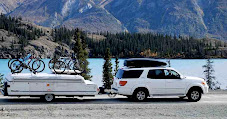
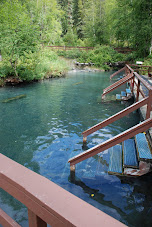
We are just finishing our first week at Milagro Cohousing in Tucson.....we are in love with the place, the peace, the possibilities. It is making the transition from the life of the free to one of home somewhat easier. We've rented a 3 bedroom house here for two weeks, perched on 35 acres of open space. We look west back to the Tucson mountains, north towards Phoenix, and NE towards the Catalina mountains. The cohousing is on the west side of town and is slightly higher in elevation, so we have a great view of things and are not affected by the chaos of the city. The heat has been very forgiving....only today did it climb into the 80's....it is supposed to climb back into the low 100's any day now, which I guess is good since we are looking forward to seeing what this place feels like HOT!
We have been spending a lot of time doing puzzles and reading the Lord of the Rings out loud. We are half way through the 2nd book and find it is a great distraction to life in the United States. We are getting Popi mended, and our trusty Toyota just came back from a tune up. The kids attended a class at the Paolo Freire Charter school they got into last Thursday, and it was a big success. Right now we are having the luxury of actually living in a place we may be buying (not this house exactly, but one in the community). We will be here one more week checking things out, then up to New Mexico for a few weeks. By the end of June we will have decided where we will be landing, and will head back to Massachusetts to get our things.
We still have June and July to play with and frolic in our pop-up, but something felt very conclusive when we left Mexico.....our time on the road IS winding to a close and the void in our bank account is making whispers of work and home a necessity. However, we still have some wandering to do.
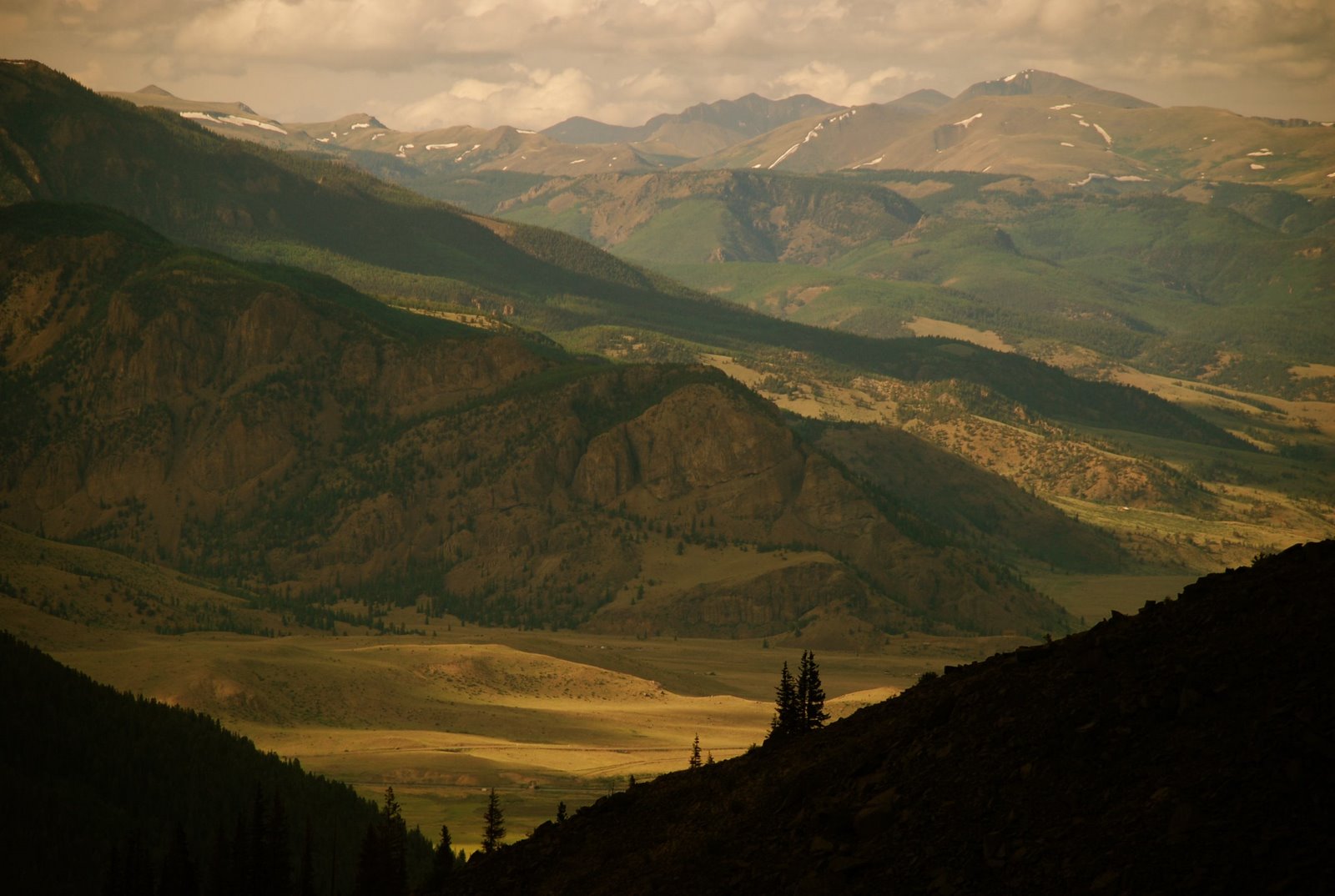
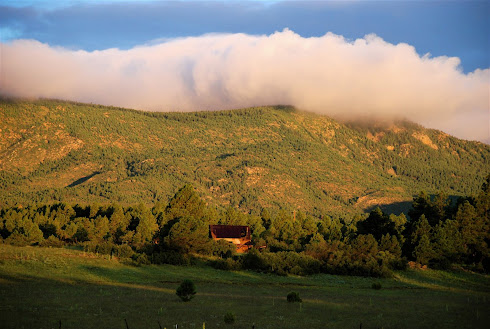
The view west from the homestead
Sweet Chance

Tuesday, May 27, 2008


Sunday, May 18, 2008
BACK IN THE US OF A
We are on Day 3 or 4 at the Prude Ranch, 5 miles north of Fort Davis, Texas. Our friends in Paa Mul told us of this place…..it is a huge ranch nestled in the mountains up at 6000 feet. I’m sitting in the lobby between Chris and Cassidy who are watching the final moments of the Celtics/Calves game 7 and the energy is, well….very tense.
Oooooeeeeee, I guess we are back in the thick of it! Actually, Fort Davis is far from the thick of it. The population is around 500, according to the receptionist here. Maybe 800 if you include all the wranglers and ranchers. There are beautiful rock outcroppings, rolling hills, river beds with huge cottonwoods, and otherwise low brush of the high desert. (There are now 7.9 seconds left in the game and it is even MORE tense…2 point, no…3 point game).
San Miguel de Allende
San Miguel de Allende was our last stop as tourists in Mexico. It is an old silver mining town which has maintained much of its old flavor and beauty from its glory years as a silver center. It is high in the sierras of east central Mexico and is much cooler than the valleys around it. It is for this reason that money has flowed to this city even after the silver ran out as people from other parts of Mexico and now from around the world have bought property and houses there. The “Centro” is wonderful with narrow and steep streets winding around an area full of shops and restaurants. There seem to be a fair number of expats from the USA and it is easy to see why they come here with its beauty and the sense of safety walking the down its streets. It was a good visit and we’ll have to visit again-when we have more money!
We left San Miguel de Allende after 3 nights and got on route 57 that goes due north to the border. Some kind of wind was sweeping us out of the country and we made it to Eagle Pass, TX, in 2 days. We spent a night in Saltillo and amused ourselves in the car by reading the Fellowship of the Rings out loud. We made it to the “frontera” in record time and then only spent 10 minutes on each side of the border checking out of Mexico and in to the USA- a record of sorts. It must have been the kids. They usually are looking in my spare tires and toothpaste containers-this time they just asked if we had anything to declare and waved us through when we said no (they did claim our salami sausage as contraband). We then drove up to Del Rio through a driving rain and hail storm which cleaned off all of the Mexican dust from the car and trailer and camped at an RV park along the highway before moving on to Ft. Davis.
The Prude Ranch
We are spending 3 nights here at the Prude Ranch which is a combination RV park, cabin and bunkbed destination site and riding stables. We’re one of only 2 RVs here and have taken the time here to catch up on baseball (watched 2 BoSox games), basketball (watched 2 Celtics games) and Internet (contacting Tucson people about places to rent and setting up job interviews in NM and Colorado before we make our final decision). Anny and Teslin did a short 30 minute ride here with the stables which wasn’t much so we all saddled up down at Ft Davis at Lajita’s Stables where we went on a 5+hour ride up into the hills with a wrangler (we brought along our Frequently Used Wrangler Phrasebook to help with language hurdles) and had a great time. Now we are all a little sore but happy and we all spoke the same language in many ways so the day was a success! Now we are off tomorrow to Tucson to start the last difficult process of deciding on a job and home. This is going to be tough!!!!!!!! Travelling was much easier than making these necessary decisions. Anyway, adios for now.
Anny and Chris
Monday, May 12, 2008
Back on the road!
I am sitting in Popi having a nice cup of tea and listening to the traffic and bird sounds of Monday morning in San Miguel de Allende. We are in La Siesta Hotel and RV Park on the edge of town. It’s the closest you can get to Centro with anything larger than a van. There are 2 other rigs here, but so far we haven’t seen any people. Most campers have made their way north by now. Perhaps to avoid the intensely hot weather we’ve experienced over the last few weeks. Coming up through the state of VeraCruz, it was in the high 90’s and very humid. Someone told us the town of Vera Cruz had set a new record 3 days ago…49 degrees C. I remember sitting in our Posada in Oaxaca having Celsius lessons from our friend Dan. He said the low 20’s were cool and comfortable, and approaching 30 is a hot afternoon. 49 must be cauldron weather.
Driving somewhere near the port of Vera Cruz we stopped at a Pemex station and the car’s thermometer was at 100. It was so humid out it looked foggy. I came back from the bathroom and asked Chris…..”Surely Tucson can’t feel hotter than THIS at it’s worse!....?” The unfortunate answer was: “Well…….actually, it can”. The nights here in San Miguel are forgiving….the climate is dry and the temps go down into the 60’s late in the evening. We had 3 nights on our way here that were in the 80’s and humid. The big Kahuna just blew mist on us. There is something to be said about a dry climate that cools off nicely at night.
VOYAGE UPDATE
We left Paa Mul on May 1st and headed to Valladolid via Tulum, about 2 hours away. We spent 2 nights there, camped at a great restaurant, Restaurante Hacienda Ticuch, just outside of town. It was an old Hacienda with a huge grounds complete with a chapel, peacocks, a tiny pool, and extremely friendly people. It’s only drawback (besides the near 100 degree weather) was that it had “Topes” right out front. This meant that during the night all the trucks approached the “topes” going fast and put their jake breaks on (that loud sound semis make slowing down). Then, once across it, they’d slam their foot on the accelerator and take off again. The peacocks also had their stories to tell all night.
Vallodolid was a great jump off point for Rio Lagartos. Cassidy wrote a great blog entry on Rio Lagartos, and you can see his post for specifics on bird species (www.birdnutsblog.blogspot.com) . We hired a boat and guide up at the port in Rio Lagartos, and went out for about 4 hours. Our guide was Erik Ramos Celis, and he was very knowledgeable about birds (www.negroerik@hotmail.com). We passed on the offer to visit the salt ponds where you could smear salt paste all over your body (a favorite with the Mexican tourists), and concentrated on the channels that led through the mangroves as well as the more open estuaries where the flamingos were. We saw 49 species of birds, and got fairly close to a group of several hundred flamingos. They were quite skittish but we were able to get out of the boat and approach them from behind some dunes. We observed them for several minutes from 30-40 yards away before they saw us and took off en masse. They then continued to circle around for awhile before settling down a bit further away. There was a huge pile of salt in the distance, and evidently they manufacture it in the area. All the places I’ve seen flamingos in the wild have been in areas where salt was harvested (Celustun, Rio Lagartos, and Bonaire). The critters that are the basis of the flamingos’ diet must thrive in the shallow, high salinity waters of these areas.
From Vallodolid, we spent one rather luxurious hot night at the Mayaland Hotel and Bungalows right at the archeological site of Chichen Itza. Chris and I had been there on our 10th anniversary trip, and the kids wanted to see it for themselves. It is a 100 acre spot, with amazing grounds, trees, peacocks wandering around, and lots of birding. We had fun being in a bungalow for the night. Chris and I slept in the loft under the thatch. At dawn, we awoke to a symphony of bird song, a lot of which was coming from the top of the thatch a few feet away. It was like waking up in the boughs of a tree. We found the Chichen Itza ruins HOT, busy, and disappointing after our amazing tours in Chiapas.
From Chichen Itza, we went down to Isla Aguada, a tiny fishing village on the gulf coast of Campeche (a bit north of Ciudad del Carmen). We had our first tire blowout of the trip on the trailer which luckily happened on probably the only stretch of Mexican highway with a level median which we slowly drove on to and changed the tire. Chris had the joyful experience of watching the sun set across the gulf while he did his duty and got us back on the road. We had heard that there was a great RV place right on the water in Isla Aguada that was peaceful and fun. It was peaceful alright….mostly because it was WAY TOO HOT to be camping on the gulf. Anyway…..I’m sure it would be a lovely spot at the right season. However, Chris and I decided sometime during the night to keep on trucking off the Yucatan Peninsula. We left right after breakfast the next day, and made it to Catemaco in the state of Vera Cruz.
CATEMACO
Ahhh…..CATEMACO!!!!! We stayed at the Tepetepan Hotel and RV park. Perched high above a river, up at 370 meters above sea level, it was heaven! We were again the only folks there (except for one night when a couple came through on their way north). We parked on the grass under an enormous mango tree that was heavy with almost ripe fruit. Our site was the last one before the river, and overlooked the opposite bank where towering trees and vines were a favorite perch for a flock of black vultures The river gorge was a flyway for all sorts of birds. The first morning I woke up to see flocks of snowy egrets, green herons, black vultures, double crested cormorants, various hawks (Cassidy saw a laughing falcon), and an assortment of wonderful song birds going by. This was easily one of the most beautiful RV parks we had stayed at in Mexico.
Catemaco is an amazing area. It is in an area known as Los Tuxtlas, in Southern Vera Cruz state. It is a mountainous, jungle area with lakes, waterfalls, great swimming places, and lots of rivers. Catemaco is on the edge of a beautiful lake, Laguna Catemaco, and is very popular with Mexican tourists (during holidays and the summer). There is a road going down along the lakefront in town, the Malecon, that is lined with huge trees, currently filled with thousands of nesting cattle egrets. They were making quite a racket, and it seemed that many of the chicks were fledging, dropping out of their nests to wander awkwardly around the lake front, their parents squawking after them.
Our favorite haunt was Poza Reyna (Reina), a waterfall and swimming hole about an hours drive from Catemaco. The drive was an adventure itself winding through the countryside on a dirt road over several cattle guards and going through areas that until recently had been tropical jungle. There were few signs along the way which led to us going 2 miles up a steep 4 wheel drive road into the mountains before a campesino came out to see who in the world had made it up this far to his shack in the mountains. He helped us find a place to turn around and directed us back to where we needed to go. We finally found the water hole which was accessed by parking next to a cattle pen and walking down a path some 5 minutes to the river. The Pozo or waterhole is fed by very cool springs, and was the most refreshing water we’ve found. There is a very large swimming hole under it with several more downriver which we also explored over several hours, and I’m sure Chris will put in some great pics.
We spent 4 nights in Catemaco….it was hot during the day, but had great places to cool off. We didn’t see many travelers, and it was a peaceful, beautiful area. Chris and Cassidy did a birding trip the last day with Feliz Aguilar and saw some Toucans and large flocks of Moctezuma Oropendula among other birds, and we returned twice to Poza Reyna. We’ve marked Catemaco down as a great place to return to and explore for an extended period. There was just too much to do to pack in to this trip.
JIM & MINDY’S
We drove from Catemaco up the coast to just outside the port of Veracruz and then headed NW up the road towards Xalapa. We had been communicating with a great couple on the internet who had settled up in the countryside outside of Xalapa close to Los Baños Carrizal after moving there from Tucson and decided to stop and visit. Here is their blog: http://blog.solarhaven.org/. Jim and Mindy had built a great house outside of Tucson “off the grid” which incorporated many solar and other energy conserving principles before moving to Mexico. Their place in Chahuapan was a small block house with mango trees in the yard with their Airstream parked next to it with an additional place where we could park Poppi. We had a great visit with them, sharing supper and breakfast together while we all talked about our experiences and reasons for being vagabundos. We finally left late the next morning continuing our migration northward.
We finally got a break from the heat as we climbed the mountain range around Xalapa, leaving a hot and dry zone in to a lush, green and much cooler area just west of Xalapa. The temperature dropped from 95 degrees to 75 degrees after 2 hours of gaining elevation and we even opened the windows for while. We stayed north of Mexico City to avoid traffic and the “no drive day rules” of the Districto Federal and traveled via Pachuca to the smaller town of Ixmiquilpan. We had some great meals there at local “Barbacao” restaurants where we ingested large quantities of red meat of all varieties. We even had an amazing bowl of “menudo” for breakfast to go along with our “Borrego” tacos which made Anny long even more for the land of salads and stir fry’s up north. Another half day’s drive brought us here to San Miguel de Allende were we have settled in for a couple of nights so that we can do some nice walks through the city and regroup before the final push north.
Anny and Chris
Tuesday, April 29, 2008
Head ‘em up, move ‘em out!

Things have gotten a little slow over the past 3 weeks and the natives are restless here on the beach. We’ve had a few adventures, eaten some fresh fish, done some snorkeling, swam in cenotes, been baked in the sun (from Tucson to Tucamcari….) and we’re preparing to head north. We’ve gone some 3+ weeks with highs in the 85-90 range and the nights around 75 and sticky and we’re ready to look for someplace with cooler nights. Things have been heating up since Bonampak and we’re pretty sure our only relief will be when we pass through the mountains of central Mexico around San Miguel de Allende. We think that we will most likely arrive back in the USA the 3rd week of May somewhere in Texas.
First, a little update on our travels. After leaving Bonampak, we stayed several nights in Palenque to visit the ruins, do some more birding and say aloha to our friends Steve and Susan. We hooked up at the campgrounds in Palenque with 2 young Americans, Nate and Nicole, who were looking for a ride to the coast at Tulum and they joined us for several days of travel. We first stopped outside the ruins of Calakmul and stayed outside a small restaurant on the highway so that we could drive in to the ruins first thing in the morning. The ruins were very isolated and few tourists were there which made for an interesting visit. We decided to drive on towards the coast after the ruins and proceeded on towards Laguna Bacalar just north of Chetumal. Anny talked about our visit there which I most remember for the open air toilets with no roofs where one could heat up in the midday sun while contemplating life on the bowl, birds singing above you in the palm trees overhanging the WC. After several days there swimming and relaxing with some side visits to Chetumal to visit the Maya Culture Museum we continued on to Felipe Carrillo Puerto a few hours north. On the way there, we stopped to see Mahahual on the coast which we had heard good things about. We had heard that this area had been hit by a hurricane the previous August which had damaged the cruiseship dock and that things were slow so we thought it might be quiet there. It definitely turned out to be quiet as we found the area almost totally destroyed with most structures and businesses completely destroyed and electricity only in town. The trees were all either blown down by the wind or poisoned by the salt water surge that came several kilometers inland. We had some ceviche north of town under a tarp where a restaurant had been then continued on north towards FCP. Felipe C.P. turned out to be quite a nice little town with little restaurants and hotels and few foreigners. Cassidy and I birded a great road leading in to the Sian Ka’an Biosphere out of town the next morning while the ladies slept and upon returning, we continued north towards Tulum.
Tulum was another shock as the beach south of the ruins is now wall to wall Hotels and Cabañas all the way to where the Biosphere Reserva starts. It was heavy traffic, wall to wall gringos and we fled north without stopping for more than a bathroom break. Probably 90% of the businesses had come in to being since our last visit so it was almost unrecognizable to us and it was way too busy to think of staying there. We continued north to Paa Mul which is one of the last pockets along this coast which has not been ultra-commercialized.
The Yucatan seems to me what pre-Castro Cuba may have been like with unrestricted investment and building by all comers, foreigners and rich Mexicans alike, little protection of the environment, no sewage treatment plants from Cancun to Chetumal that we could see-an entrepeneur’s dreamland. American business people talked of the benefits of lack of restrictions, poor Mexicans flock here from other parts of Mexico to work in the service industry keeping wages low, local villages and landowners have been swept aside to make room for the mega all-inclusives and unplanned and uncontrolled captitalism has shown how much damage it can do in 20 years. Scuba divers are still able to go far enough offshore and to deep enough waters to find some live coral and some fish but the reefs closest to shore and the surface are now almost completely destroyed. The bays all seem filled with a fine silt which is worked up into the water with any wave action, an oily film often is seen in the top foot or so of water and the beaches between the resort groomed beaches are filled with garbage washing up on shore. The only hope that the Riviera Maya may have is if the Mexican Government realizes that it is allowing a national heritage to be destroyed by its lack of planning, regulation and infrastructure and steps in, but no one expects this to happen. They are dependent on the tourist dollars now and like any addict, have little ability to put off current benefits and pleasure in order to save this land for future generations. The lagoons of Xel-ha and Akumal are now cloudy bathtubs filled with bathers trying to see through the silt and oil as they feed the fish dogfood to keep them coming close enough to see. It probably would not bother me as much if I hadn’t been here in the early 1980’s, swimming in the clear waters, enjoying the reefs which were still quite alive and colorful. Time to move on.
We’ll try to visit some of the inland Mayan villages that still fill the countryside on the way out, maybe see the birds at Rio Lagartos, some ruins, then on to Campeche and beyond. Maybe we’re just a little homesick for something we know better, can understand. We’ll shed a tear for the Yucatan, hope for the best for its people and environment and keep on keeping on.
Con esperanza,
Chris
Attack of the Jellyfish!!!!


The latest “big event” here at Paa Mul was Teslin swimming head on into a Portugese Man of War some 10 minutes out from the beach during a group swim. We all had been snorkeling along the outer reef for 45 minutes or so and had decided to head for shore when Teslin started screaming. She had been bringing up the rear and was swimming hard to catch up when she must have swum head first into the jellyfish. Its tentacles wrapped around her neck and draped over her back to her waist before breaking off. The pain from this particular jellyfish is known as one of the worst and is described by divers as if a bucket of fire had been poured on you. Anny was the closest to Teslin when she started to scream so turned back to see if she could help but upon reaching her found she could not keep both of them above water. She called for me and I swam the 70-80 yards between us and we all started toward the beach some 10-15 minutes swim away. Teslin was beside herself and was screaming quite forcefully that it hurt and that it was burning her. She was able to hang onto my neck and be kept afloat on my back as I swam in as fast as I could. The swimming and waves pulled off all of the tentacles as we swam which was lucky as they continue to inject their poison as long as they are attached to their victims even after they are pulled off of the jellyfish. We finally made it to shore where we asked for some advice on what to do before heading back to our trailer. Teslin was having difficulty not screaming which made for some excitement for the pool crowd that day. We did some quick Internet searches for treatment options and gave Teslin some Benadryl and Ibuprofen while cleaning the area with vinager and finally after about an hour she was able to stop her screams and just sob when the pain increased periodically. She had large welts across her back and front of her neck and redness to many other areas of her back and fingers where the tentacles had either latched on or brushed against her skin.
We did not see the actual body of the jellyfish which Teslin ran in to so walked the beach that afternoon and the next morning to see if any were washing up on shore. To our amazement, we found many Portugese Man of War who were just washing up on shore north and south of our swimming area. The dive shop said that they had not seen these in our bay for 5+ years and were surprised by their presence. These jellyfish are quite beautiful as well as deadly and we did a lot of reading about them over the next 24 hours. I’ve included pictures of both the Portugese M of W that we found and Teslin after her experience.
We were all reminded of the importance of keeping your eyes open while swimming and also how aware one should be out there in the ocean. We all learned from the experience though Teslin had to pay the biggest price.
Chris
LA PLAYA

Estamos en Paa Múl, un campamiento entre Playa Del Carmen y Akumal. Es un lugar que tiene menos desarrollo que otras partes de la costa este del Península del Yucatán. Paa Múl tiene un hotel y siete cabañas, una piscina enfrente del mar, y un restaurante. La mayor parte de este lugar es para RVs, los coches muy grandes, como casas con ruedas. Personas han construido palapas encima de los RVs, y se parecen como cabañas. Hay más de 100 como eso. La mayoría de las personas son de los Estados Unidos y Canadá y regresan a sus países en la primavera. Es muy extraña, pero podemos vivir muy económicas en nuestro tráiler de camping. Lo que no me gusta es que hay pocos de los extranjeros que hablen español. Es como cualquier playa en los Estados Unidos. ¡PERO….es una playa! La excepción es los domingos, cuando muchas familias Mexicanas vienen por el día.
Hemos estados aquí hace tres semanas y vamos a salir en unos días. El mar es fantástico para nadar pero el arrecife y los corales no están en buena salud. Demasiados hoteles, casas, y resortes, al lado del mar han tenido un gran impacta. También han tenido unos huracanes fuertes en los años pasados. Paa Múl es un lugar a que muchas personas vienen para nadar con esnorkel. En el pasado, el arrecife aquí debe haber estado increíble. Ahora, los corales que están en buen salud son más profundo, como 4 o 5 metres, y tiene que hacer scuba para verlos. Lo que se veen el mar enfrente del restaurante son peces interesantes, y pequeños lugares de los corales.
Ayer, fuimos a una laguna unos kilometres al norte de Akumal. Fue muy divertido….muchos peces y lugares interesantes para explorar nadando con esnorkel. El agua estaba muy protegida y calma. Estaba bueno, porque los niños, hace tres días, tenían un poco miedo del mar. Teslin chocó contra un Portuguesa Man of War (una medusa muy malo). Nuestra familia estaba nadando con esnorkeles afrente de Paa Múl, cuando Teslin empezó a gritar. No lo veíamos, pero ella recibió muchos aguijones. Mas tarde, Teslin nos dijo que siento como un garrafón del fuego en la espalda. Ella tomo medicina para dolor y hinchazón, y todavía, hace tres días, tiene los marcos del medusa en la garganta y la espalda.
Pues…es la hora ir a la playa. ¡Adiós Amigos! Anny
Saturday, April 19, 2008
Resplendent Quetzal
Cassidy Ruge, age 13
Description
Resplendent Quetzals are one of the world’s most gorgeous birds. I have never seen one myself, but I’ve heard of how beautiful they are. Males have a red breast, green body, bluish back and very long, green tail streamers. They also have a yellow beak, which is fairly small (the females have black beaks). Males are 39 inches in length, including their plumes or streamers. Females have much shorter plumes (just extending right below the tail) and are drabber in color. The “song” is like “a whimpering pup” or as kyow or vi-viu, which is sometimes repeated monotonously. They have other unmusical calls too.
Range and Habitat
“Resplendents”, as I call them, are found from southern Mexico to western Panama. There is also a subspecies found in Costa Rica, P.m. costaricensis. The population in southern Mexico (Pharomachrus mocinno) is found only in Chiapas in remote montane cloud forests called “bosques de niebla”. The “bosques de niebla” are dense and wet and have mixed trees including pines. One of the quetzal’s favorite trees is the tepeaguacate tree, which has small avocados that the quetzals like to eat (see diet).
Diet
Resplendent Quetzals eat mainly fruit; their favorites are the wild avocados from the tepeaguacate trees. They also like fruit from the trees of the Laurel family. The birds swallow the fruit whole and then regurgitate the pits, which helps to increase the population of these trees.
Resplendent Quetzals are weak fliers and they have some predators. These include the Ornate Hawk-Eagle, owls, and Kinkajou, which hunt the birds themselves. Emerald Toucanets, (yes, little toucans) and squirrels, eat the eggs of the quetzals when the nest is left unguarded.
Breeding
Resplendents usually start calling and looking for mates in February. They start nesting a little bit after they call and mate. The female chooses a suitable tree for nesting (mostly rotting tree stumps) and then the pair pecks out a good-sized hole for the nest. Then the female lays 2 pale blue eggs and starts incubating them. The male and female share incubating: the male sits on them in the daytime while the female incubates at night. The incubation period lasts 18 days while the pair keep switching off incubating. When the male is sitting on the eggs, his long tail hangs out of the nest-hole so that from a distance it looks like a green fern is growing out of the hole! When 18 days are up, two little quetzal babies pop their heads out of their shells and say “give me some grub, mom”! Both parents take care of the little youngsters and feed them their grub, which includes fruit, berries, insects, and some frogs and lizards (big grub). Here is when it gets interesting. Near the end of the rearing period the female gets sooooo fed up with her little furballs that she says “vaya con dios you little scraps”, and leaves the dad to finish rearing the young until they are ready to fend for themselves!
Myth and Legend
Resplendent Quetzals play a big role in Mayan and Aztec legend and myth. The Mayans and Aztecs viewed the quetzal as the “god of the air” and as a symbol of goodness and light. Mesoamerican rulers wore headdresses made from quetzal feathers that symbolically connected them to Quetzalcoatl. Quetzalcoatl was the god of wind and the creator god. It was a crime to kill a quetzal so people simply captured and plucked its tail streamers and then released the bird. The tail feathers supposedly grew back in time. Ohh, I forgot. Mesoamerica was a region of Central America and South America that was inhabited by the Mayans and several other pre-Columbian civilizations.
The Resplendent Quetzal is Guatemala’s national bird and the quetzal is on their flag and coat of arms. The bird is also on the paper money and of great relevance in the country. It is mentioned in the widely popular legend of Tecún Umán, a prince/warrior of the Quiche Maya. The legend is that when the conquistador, Pedro de Alvarado, fought against Tecún Umán, there was a quetzal flying above the fight. Pedro de Alvarado managed to disable Tecún Umán’s horse and then killed him. Then, the quetzal flew down to Tecún’s chest and dipped its chest in the warrior’s blood. It was there that the quetzal acquired its gorgeous red chest feathers.
Conservation
Resplendent Quetzals are as Wikipedia states “near threatened”. They are not on the Endangered Species List but they might be on it in the near future. The population in Guatemala and southern Mexico is most threatened due to loss of habitat and hunting for their feathers. Costa Rica’s population of quetzals is in better shape because Costa Rica is setting aside some forest for quetzals and other wildlife.
I wrote this article so I could learn more about quetzals and help the species. I traveled through the quetzal’s forest in southern Chiapas and never saw one but I’m glad I at least know a little bit about them.
References:
1. Resplendent Quetzal, by Wikipedia, the free encyclopedia
2. El Quetzal, by Miguel Limón Rojas, Edmundo Salas Garza
3 A Guide to the Birds of Mexico and Northern Central America, by Steve N. G. Howell and Sophie Webb
4. The Resplendent Quetzal, by TED Case Studies
Saturday, April 12, 2008
living small

Chris estimates we have 24 square feet in Popi. Maybe 26 he says. That doesn’t include the 2 enormous beds on either end of the pop-up, or our table area. Our one couch is usually covered in bags and books, but we are able to leave the middle part empty with some effort. Our 2 counters are covered by milk crates filled with food, a stack of 4 plastic storage drawers of dry goods, and Chris’s towering metal shelf that houses our ghetto blaster, towels, books, Baby (our sourdough starter that lives in a 2 quart casserole dish), and the mother load of all STUFF.
Our square footage shrinks as we unpack more. The first few days are always fine. Then STUFF happens. Books come out of bags, and the storage containers in the car become volcanoes of art, shells, journals, and knick knacks, all slowly migrating into our square footage.
Then there are the fans. So far we have made it with 2 small Vornado fans, one facing each bed. For a surprise, Cassidy, Teslin, and Chris bought an enormous rotating fan. Its base takes up the entire walking area in front of the sink (that’s 4 of the 24) and it stands 5 feet high. It’s Iowa size. Only Chris would think that we could actually fit it into this place. But oooooo does it move air! Now at night, the kids each have a fan and we have the big Kahuna blowing on us. We’ve all slept better and it’s great for hot flashes. In the daytime, we move things off one end of a counter and put it up there so no one catches their privates in it.
We have a morning and evening rotation ritual. Evenings, we uncover our beds from the myriad of things that have accumulated there. The guitar, computers, and our ocean size wooden fruit bowl all make this voyage. In the morning, everything that spent the night on the table and the benches is moved back onto the beds so we can sit down.
Another rotation ritual is to open and close the inside stove. We do most of our cooking on the outside stove, but morning tea is produced inside---very important. When the stove is closed, it offers almost 2 whole square feet of counter space, so it’s well worth the effort. Each morning it’s filled with various water jugs, dirty dishes, and the usual left behind things from the night before.
There is a bright side to this life of rotation…..it keeps the inch long cock roaches on the move. This morning when we moved a milk crate off the bench, a big honking cock roach fell out onto the table. Chris pounced on it like a cat, but was forced to have mercy on it by Cassidy and Teslin, who insisted he let it go by the dumpster where it can lead a happy life. Ahh yes. Live and let live.
Anny
Saturday, April 5, 2008
WOW!!!

It is 7:30 pm and Chris and I have been instructed to sit down and RELAX by Cassidy and Teslin who are making us dinner. Not just any dinner, Cassidy is out at the grill by himself doing his first rite of passage at the barbeque and Teslin is making a salad and setting the table in a flurry of action. We're doing our best to drink beer and relax, but frankly, Chris is just plain uncomfortable with the solo action outside. He feels that barbequeing is a male bonding experience and feels left out stuck here inside of poppy. Ahhh....there are some wonderful surprises to watching your children grow up!
La Playa is Windy!

Paa Mul
April 5th or so
It's another one of those early mornings when everyone is still asleep and I've managed to creep out and make tea and get to the only computer that has internet. Hee hee. We are tucked into Paa Mul, just south of Playa del Carmen on the Yucatan Peninsula. It is a former coconut plantation that was turned into a RV resting home of all things. There is a hotel with some rooms and some cabanas further down the beach, but most of the property is sites for RV's. It actually is very nice....most of the spots are semi-permanent and palapas have been built around the RV's. Many people buy or rent a space year round and return north in the summer. There is a fairly large group of people that live here year round and call it home. We know of two families so far, one from California and one from Canada, who are here with their families and home schooling. One family set off for 2 months 4 years ago.....I see how it happens, believe me!
The entire Yucatan coast has turned into a swarm of resorts, back to back. We stopped in to Tulum on our way North and were shocked by what they've done to the place. For Chris it had been 30 years since he first visited, and at that time there were only two places just south of the ruins. I was last there in 91 and even then, it was quieter. Now the area stretches south all the way to the preserve where building is not allowed. We spoke to a worker at Cabanas Tulum who said the area lost their electricity during Hurricane Katrina 7 years ago and it still hasn't been restored. With so many resorts dependent on it, you have to wonder why the government hasn't replaced it. The motels must use generators and solar.
What is amazing about this place is that there is no sign of development nearby. Paa Mul itself was built in the 70's (I think), and the entire bay here is owned by them. There is a sandy road that leads north along the coast from the campground to another bay, which is even larger than this one, and is completely undeveloped. One of the security guards told us it is owned by the same guy who owns 2 of the largest resorts down the way and has "plenty of money". One side of the road is lined with mangroves and scrub, and the other a pristine sandy beach. There was little more than some pelicans and alot of trash that had washed in. It is impossible not to wonder what will become of this beautiful stretch. The security guard said for now it was protected as a turtle breeding area....for now. He said if it was ever to be developed it would only be cabanas (versus a mega hotel). Time will tell.
It is hot here but there is a stiff wind.....24 hours a day. The surf is quite worked up and Cassidy and Teslin have been boogie boarding. We are paying by the week, but thinking about a month. Once you get in here, it is hard to leave! There is a pool right in front of the ocean, a nice restaurant, and all the facilities we need. 10 minutes up the road is more than we need....all the giant stores and strips of motels.
Well... everyone is up and asking for a turn, so off I go....TATA for now, Anny
Tuesday, April 1, 2008
¡AGUA DULCE!

Estamos en un lugar muy tranquilo, al lado de la Laguna Bacalar. Las personas de aquí nos dijeron que al agua no es de sal, es dulce. Podemos ver una península pequeña al otro lado de esta laguna, y es el lugar del mar. Cassidy y Teslin están tratando abrir unos cocos. Cassidy se cayó dos veces….es trabajo difícil. Chris está nadando, y nuestros nuevos amigos están tocando música y suben un árbol de coco. ¡La Vida estupendo!
End of March
We are working on day 4 at Laguna Bacalar just North of Chetumal. We’ve just completed bucket baths on the grass under the palms and are feeling fresh and frisky. The water is crystalline turquoise, although it is fresh water (I’m not sure why it is called a laguna….it does not seem to be connected to another body of water). All of the Yucatan is a limestone shelf, so any body of water that is clean looks turquoise because of the white bottom. The laguna is a long slender body of water that lies about 6 miles inland from an enormus brackish bay which leads out to the ocean. Cassidy and Teslin have written about the wonders of the place, so check out their blogs too (see under links).
The place where we are set up, Balneario Cocolitos, is not a formal campground, although the family that lives in the palapa here let folks stay for a fee. We snaked our electrical cords over to their spot, and are set up beneath the palm trees on the grassy shores of the laguna. It is quite idyllic, especially since we are the only folks here, along with the couple that we gave a ride to. There are no showers or water other than the laguna, although little is needed. The toilets are the best….they are nice roomy open-air stalls so you can bird while you relieve yourself. This morning there was a pair of orioles in the palm tree above the toilet. It does get a little hot at mid-day, but who’s complaining.
Ceynote Azul is just up the road. It is a deep, fresh water sink hole surrounded by mangrove and palm trees. A large restaurant dominates the scene and it has become a major destination place. We originally came to this area to go to the ceynote, but it is only accessible through the restaurant and is a much used place. A large assortment of fish hang out by the restaurant since they feed them tortillas regularly, and there is a boat/raft you can swim out to and jump off of. My favorite thing about ceynotes is to explore the mangrove roots for all walks of fish. We haven’t done that with Ceynote Azul yet…we will see. From what I remember, the keynotes are an important rookery for fish who spend their early months sheltered in the roots of the mangrove trees. I’m not sure what the heavy use of the area has done, but I imagine it is not good.
The couple that has been traveling with us, Nicole and Nate, are taking off this morning for Tulum. The peace of this place might be a little slow for the jovenes…..it also has no facilities at all. We are all set up here with electricity, fans, and a kitchenette (emphasis on “ette). But you know, as we spend more and more time leading this simple life, it becomes more evident how little you need to live off of. Nicole and Nate are back-packing and living much more simply than us. Ahh to be 20-something again!
Life on the road has become second nature. We’ve figured out the basics of how to always have delicious, clean water to drink, how to disinfect fruit and veggies, and how to live without toilet seats. Chris has the driving down, we see most of the topes, most of the time, and so far we've only gotten one policia bribe request (for a flashlight). Poppi continues to show the strain, the fridge liner is busted, the awning is held together with duct tape and other tarps, and the couch is held up by a cutting board. Our beds are still heaven, and we’ve figured out how to move deftly out of each other’s way in this tiny space. Our only summit yet to climb is to teach the Sequoia to drink something other than gas.
So much for now! Anny
Subscribe to:
Posts (Atom)